
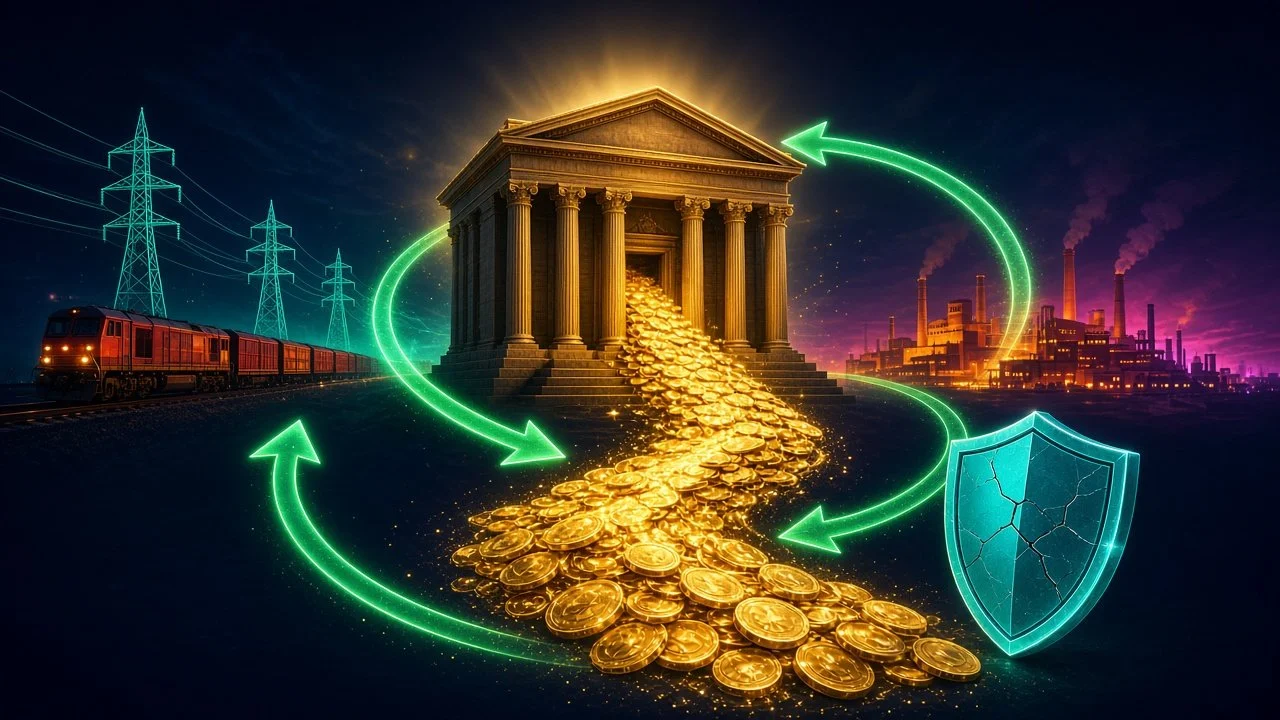
Greg Abel's Berkshire bought back twice as much stock in three months as it did in the entire first half of the year, even as insurance profits slid.
By Methodical Jon | Nov 8, 2026
Berkshire Hathaway (NYSE: BRK.A, BRK.B) repurchased about $9.6 billion USD of its own stock in the third quarter, the conglomerate said in its earnings release on Saturday, November 7th 2026. That brings buybacks for the first nine months of the year to about $14.4 billion USD, meaning the July to September stretch alone was double the roughly $4.8 billion USD bought back in the first half.
It came in a quarter when profits fell. Operating earnings dropped 5.8% to $12.705 billion USD, according to CNBC, as the insurance business cooled. The message from Omaha is clear: the new CEO is more willing to put the famous cash pile to work.
What happened
The headline numbers, straight from Berkshire's release:
- Operating earnings: $12.705 billion USD, down from $13.485 billion USD a year earlier.
- Net earnings: $22.112 billion USD, down 28% from $30.796 billion USD, mostly because investment gains nearly halved to $9.407 billion USD.
- Insurance underwriting: $1.352 billion USD, down 43%.
- Insurance investment income: $2.734 billion USD, down 14%.
- BNSF railroad: $1.729 billion USD, up about 19%.
- Berkshire Hathaway Energy: $1.612 billion USD, up about 8%.
- Manufacturing, service and retailing: $4.042 billion USD, up about 12%.
Reuters reported that the insurance slide reflected declines at businesses such as Geico. So the story is two-sided. The railroad, the utilities and the industrial companies all grew. Insurance, the engine that has funded Berkshire for decades, gave some back.
Berkshire's insurance float, the premium money it holds and invests before paying claims, stood at about $178.5 billion USD at the end of September, up about $2.1 billion USD since the end of 2025, the company said.
Context
This is only the third quarter with Greg Abel as CEO after Warren Buffett handed over the top job at the start of 2026. Buffett was famously patient with buybacks, buying only when he believed the stock traded below its intrinsic value. Toward the end of his run he also struggled to find large acquisitions, and cash piled up.
Abel is moving faster. Reuters described him as showing "a greater willingness than his predecessor Warren Buffett to put the conglomerate's enormous cash hoard to use." Even after the buybacks, Berkshire still holds well over $350 billion USD in cash and equivalents by both Reuters' and CNBC's measures. The two outlets used slightly different definitions, so the exact figure depends on whether you include cash held at the railroad and utility units.
The buyback is not a rounding error either. Berkshire's record buyback year was 2021, when it repurchased $27 billion USD of stock, according to Reuters. If Berkshire kept up this quarter's pace for a full year, it would top that record.
The release also shows the share count shrinking. Berkshire had 1,418,900 Class A equivalent shares outstanding on September 30, compared with an average of 1,438,223 in the third quarter of 2025.
Why it matters
Buybacks are a signal about price. When Berkshire buys its own stock, management is telling shareholders it thinks the shares are worth more than the market is charging. Doing it at double the earlier pace says Abel sees value in a boring basket of railroads, utilities, insurers and factories.
It also answers a question investors have asked since the succession: would Berkshire keep sitting on cash? This quarter says no, at least not entirely. And because Berkshire buys from shareholders who want out, every remaining owner now holds a slightly bigger slice of the same businesses.
What to watch next: whether October and November buybacks keep up this pace, whether Geico and the reinsurance unit stabilize, and whether Abel uses the cash for a large acquisition rather than only buying back stock. Berkshire also urges investors to read the full 10-Q, which carries more detail than the short release.
The money lesson
1. Watch what management does with cash. Earnings tell you how the business did. Capital allocation tells you what leaders believe. Abel's buybacks are a louder statement than any shareholder letter.
2. Separate operating results from paper gains. Berkshire's net income fell 28%, but most of that came from swings in its stock portfolio. Berkshire itself calls quarterly investment gains "usually meaningless." Operating earnings are the cleaner read.
3. A diversified business smooths the ride. Insurance had a weak quarter, while rail, energy and manufacturing grew. That mix is exactly why conglomerates can keep buying when one engine stalls.
4. Patience and action are both tools. Buffett waited. Abel is acting. Neither is automatically right. The test is whether the price paid today looks cheap in five years.
We broke down how companies decide between reinvesting, acquiring, paying dividends and buying back stock in Episode 33 - Capital Allocation. Berkshire's third quarter is that exact decision playing out with hundreds of billions of dollars on the table.
At the time of writing (~7:30 a.m. ET Sunday, Nov 8, 2026), markets were closed for the weekend; Berkshire shares next trade Monday. This article is for informational purposes only and is not financial advice.
Sources:
- Berkshire Hathaway news release, third quarter 2026 results (Nov 7, 2026): https://www.berkshirehathaway.com/news/nov0726.pdf
- CNBC, "Berkshire Hathaway more than doubles buybacks in third quarter as earnings decline" (Nov 7, 2026): https://www.cnbc.com/2026/11/07/berkshire-hathaway-q3-2026-earnings-buybacks.html
- Reuters via Investing.com, "Berkshire Hathaway speeds up stock buybacks, though profit falls" (Nov 7, 2026): https://ca.investing.com/news/stock-market-news/berkshire-hathaway-accelerates-stock-buybacks-operating-profit-falls-4941143
Thanks for reading another Methodical Minute. To read more just like this, please subscribe below and share with someone you know.
This article may be AI-assisted and is subject to errors and omissions.