
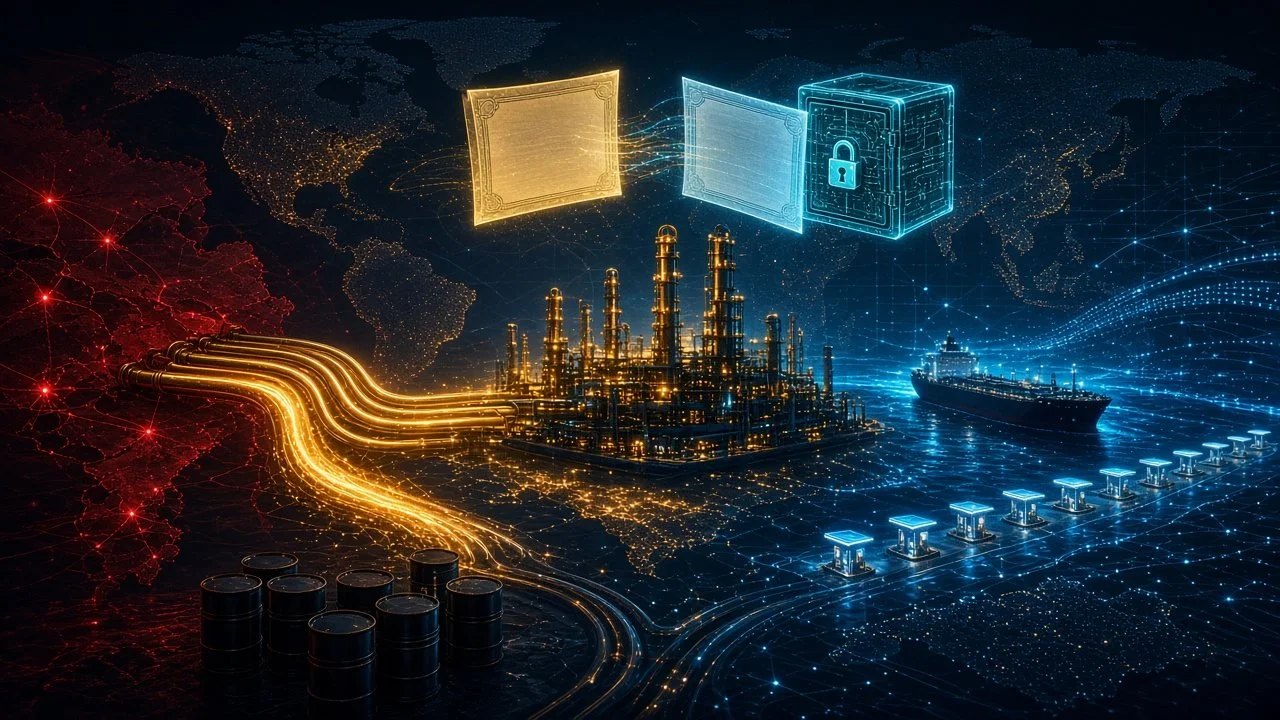
A consortium led by Eldridge, with the U.S. government's development bank as a partner, would take over refineries, oilfields and 2,000+ gas stations by handing Lukoil frozen Russian shares that sit in escrow until sanctions end. Washington still has to sign off.
By Methodical Jon | Nov 26, 2026
A U.S.-led group headed by billionaire Todd Boehly's Eldridge has signed a definitive agreement to buy Lukoil International GmbH, the overseas arm of sanctioned Russian oil giant Lukoil (MOEX: LKOH). The deal was announced on Wednesday, November 25th 2026. It is paid for with Lukoil securities that Boehly and a U.S. official put at $10 billion USD, Reuters reported, not with cash. If Treasury approves it, the biggest Russian energy portfolio outside Russia moves into American and allied hands without a dollar going to Moscow.
What happened
The consortium is led by Eldridge and includes the U.S. International Development Finance Corporation (DFC), UAE-based Catena Investment Holding and Xtellus Partners, according to the consortium's own release. Citi is the lead financial advisor.
Here is what's in the box, per the release:
- Upstream: oil and gas operations in 11 countries producing about 350,000 barrels of oil equivalent per day.
- Refining: three refineries, Burgas in Bulgaria (the largest in the Balkans), Zeeland in the Netherlands and Petrotel in Romania, with about 350,000 barrels per day of combined capacity.
- Trading and retail: the LITASCO trading business and more than 2,000 gas stations across 16 countries in Europe, North America and Central Asia.
Two people familiar with the terms told Reuters the portfolio is valued at around $16 billion USD.
How the share swap works
This is the clever part. Instead of paying cash, the consortium will hand over restricted shares of PJSC Lukoil and other Russian companies in exchange for 100% of the international unit. The release says that consideration will sit in a restricted custodial account "for five years or until sanctions are lifted," and that the assets will be completely cut off from Lukoil at closing.
Where did the consortium get Lukoil shares? According to Reuters, they were bought from U.S. and British funds and depositary banks that held them for investors. Those holdings were frozen after Russia invaded Ukraine in 2022 and written down. "We're basically exchanging shares that are worthless to Americans ... for cash that is going back to them," Boehly told Reuters.
The DFC, the U.S. government's international investment arm, gets an ownership stake "with no upfront cost to the American taxpayer," the release says. Reuters reported that the stake gives Washington a share of future profits after the private investors earn back their capital and an agreed return, plus a seat at the board table.
Context: third time lucky?
Lukoil has been trying to sell these assets since the U.S. sanctioned the company on October 22nd 2025. Earlier deals with commodity trader Gunvor and then the Carlyle Group fell apart, and Carlyle's agreement expired after it failed to win approval from the Treasury's Office of Foreign Assets Control (OFAC), Oil & Gas Journal reported.
That makes OFAC the whole ballgame. In a published FAQ, OFAC says any sale must completely sever the unit from Lukoil, block money owed to Lukoil until sanctions are lifted, and give Lukoil no windfall, "including through asset or share swaps." According to Reuters, the share-swap idea was initially rejected by Treasury before winning support from the State Department, and the UAE escrow is meant to meet the no-windfall test. A person familiar with the process said a full review could take some time, and Boehly said closing could take up to a year. CNBC's sources said OFAC is expected to sign off, but final approval is still needed.
The deal also has critics. Rep. Gregory Meeks, the top Democrat on the House Foreign Affairs Committee, asked why "a U.S. government agency is taking an ownership stake in a Russian oil company's portfolio while Russia continues its war," the Kyiv Independent reported.
Why it matters
Europe gets a cleaner supply line. CNBC's sources said the deal would let Europe buy fuel like diesel from these refineries through the U.S.-led group instead of Russia.
It also shows how Washington now does business. The DFC told Reuters that moving strategic energy assets into U.S. or allied hands is "a key policy priority," and it said it had spoken with Chevron, Glencore and Carlyle before backing this group. A government agency taking equity in a private oil deal is new territory, and the pricing of that stake hasn't been disclosed.
What to watch next
- OFAC's decision. The general license that allows negotiations and contingent contracts with Lukoil expires on December 19th 2026. Watch for an extension or a specific license for this deal.
- The new Congress. Democrats take control of Congress next year, and critics like Meeks will keep pressing on the DFC's role.
The money lesson
1. Find value in what others wrote off. Frozen Russian shares were marked near zero by Western funds. Boehly's group turned them into currency for a portfolio valued around $16 billion USD. One investor's dead asset can be another's leverage.
2. Structure beats price. Two buyers failed before this one. The difference was a structure the regulator could live with: no cash to Russia, escrow and a government partner.
What actually counts as an asset, and when does it stop being one? We broke down the basics in Episode 58 - What is an asset?. This deal is a real-world answer: shares worth nothing on a fund's books just became the key to a refinery network.
At the time of writing, the deal is signed but not closed and still needs OFAC approval. Lukoil did not respond to Reuters' request for comment. This article is for informational purposes only and is not financial advice.
Sources:
- Business Wire (consortium release), "American-Led Consortium Announces Agreement to Acquire LUKOIL International's Global Energy Portfolio" (Nov 25, 2026): https://www.businesswire.com/news/home/20261125144720/en/American-Led-Consortium-Announces-Agreement-to-Acquire-LUKOIL-Internationals-Global-Energy-Portfolio
- Reuters via Investing.com, "Exclusive-Billionaire Boehly signs US-backed share swap deal to buy Lukoil global assets" (Nov 25, 2026): https://www.investing.com/news/stock-market-news/exclusiveboehly-signs-usbacked-share-swap-deal-to-buy-lukoil-global-assets-5051129
- CNBC, "Investors led by U.S. billionaire Todd Boehly to buy Lukoil's oil and gas assets outside Russia, sources say" (Nov 25, 2026): https://www.cnbc.com/2026/11/25/investors-led-by-todd-boehly-to-buy-lukoil-oil-and-gas-assets-outside-russia.html
- Oil & Gas Journal, "US-led consortium aims to acquire LUKOIL International's energy portfolio" (Nov 25, 2026): https://www.ogj.com/general-interest/news/55421625/us-led-consortium-agrees-to-acquire-lukoil-internationals-energy-portfolio
- U.S. Treasury OFAC, FAQ 1224 on General License 131L (updated Nov 19, 2026): https://ofac.treasury.gov/faqs/1224
- Kyiv Independent, "US billionaire, government agency ink deal to acquire sanctioned Russian oil giant Lukoil's global assets" (Nov 26, 2026): https://kyivindependent.com/us-consortium-announces-deal-to-acquire-sanctioned-russian-oil-company-lukoils-global-subsidiary/
Thanks for reading another Methodical Minute. To read more just like this, please subscribe below and share with someone you know.
This article may be AI-assisted and is subject to errors and omissions.